

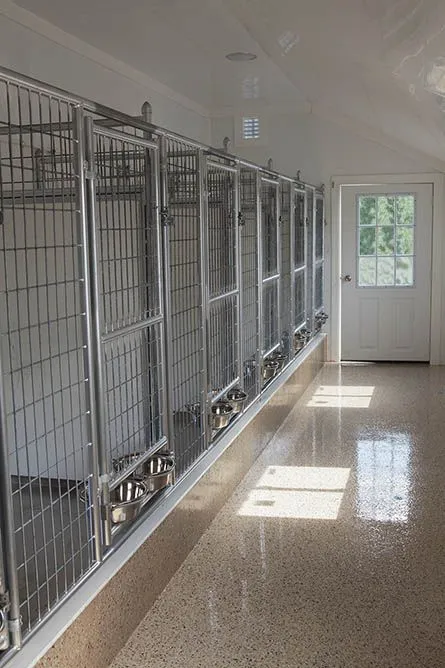

Outdoor kennel runs are exposed to conditions that make drainage especially important. Rainfall, routine washdowns, animal waste, cleaning chemicals, dirt, and seasonal weather can all introduce moisture to the same concrete surface. When water repeatedly collects in low areas, applying a new coating may improve appearance without correcting the underlying problem. Animal-care facilities planning a flooring renovation should therefore evaluate slopes, drains, concrete condition, and runoff patterns before selecting the final resinous system.
Standing Water Is an Early Warning
Water that remains on a kennel floor after cleaning or rainfall often indicates more than a maintenance inconvenience. Low spots, deteriorated concrete, blocked drainage routes, or unsuitable slopes may prevent liquids from leaving efficiently.
Managers should observe the surface after both routine washdowns and natural rain. Areas that remain wet significantly longer than surrounding sections should be marked for closer inspection.
These observations can help distinguish drainage problems from issues related only to the existing coating.
Coatings Cannot Correct Major Slope Problems
Resinous flooring can create a continuous protective surface, but it should not be expected to rebuild significant floor elevations automatically.
Facilities researching Outdoor Dog Kennel Flooring Nj should inspect whether the concrete directs water toward drains or appropriate runoff points. If major depressions or poor slopes exist, substrate repairs may be needed before coating installation.
Correcting these conditions during renovation is usually more practical than discovering standing-water problems after the new flooring has already been completed.
Drain Surrounds Need Careful Repair
The areas around drains frequently experience concentrated moisture, chemical exposure, cleaning, and animal traffic. Cracks or deteriorated concrete at these transitions can therefore develop faster than damage across the open floor.
Old patches should be checked for stability, while loose or weakened material may need removal. The connection between the drain and surrounding surface should also allow effective cleaning without leaving irregular edges where debris can collect.
Drain detailing should be included in the original flooring scope instead of handled as a last-minute repair.
Weather Adds More Moisture Stress
Outdoor kennels experience rainfall in addition to cleaning water. Seasonal temperature changes can also affect exterior concrete over time.
Cracks that seem minor during one season may become more noticeable after repeated environmental exposure. Water entering damaged sections can further complicate maintenance.
Before resurfacing, facility managers should identify cracks, chipped edges, and deteriorated joints so the substrate can be repaired and mechanically prepared rather than simply covered.
Preparation Creates the Foundation
Existing coatings, dirt, contamination, weak concrete, and previous repairs can interfere with adhesion. Mechanical preparation helps remove unsuitable material and creates a profile for the new flooring system.
When working with a New Jersey Epoxy Flooring Service, managers should ask how outdoor substrate conditions will be evaluated before resin layers are applied.
Preparation may reveal additional deterioration hidden beneath an old coating. Allowing time to address these conditions can help avoid carrying existing weaknesses into the resurfaced floor.
Texture and Drainage Work Together
Slip resistance matters in outdoor animal areas because surfaces can become wet after rain or sanitation. However, adding extreme texture does not solve drainage problems.
A heavily textured finish can actually increase cleaning effort by trapping soil, hair, and other debris. The surface profile should provide practical traction while still allowing water and contaminants to be removed efficiently.
Drainage, slope, texture, and cleaning procedures should therefore be considered as one system rather than separate decisions.
Check Indoor-to-Outdoor Thresholds
Kennel facilities often have doorways connecting interior animal spaces with exterior runs. These thresholds receive repeated traffic from animals, employees, carts, and cleaning water.
Elevation differences or chipped concrete can create vulnerable points. Rainwater may also travel toward the building if the surrounding slope is unsuitable.
Managers should inspect these transitions during the same drainage assessment and correct damaged edges before the final flooring system is installed.
Build Drainage Checks Into Maintenance
Even after renovation, drains and runoff routes should remain part of routine inspections. Leaves, hair, soil, and other debris can reduce drainage efficiency outdoors.
Maintenance teams should watch for new areas of standing water, cracks around drains, or changes in how quickly surfaces dry after cleaning. Early identification can prevent small drainage or concrete problems from becoming larger flooring repairs.
Seasonal inspections are particularly useful because weather conditions can reveal issues that may not appear during ordinary washdowns.
Conclusion
Outdoor kennel resurfacing should begin with understanding where water comes from and where it needs to go. Rainfall, sanitation routines, concrete slopes, drains, thresholds, cracks, and surface texture all influence how effectively the area can be cleaned and maintained.
Applying a new coating without correcting significant drainage or substrate problems may simply conceal them temporarily. By addressing slope, concrete damage, preparation, drain transitions, and maintenance together, animal-care facilities can create an outdoor flooring system that is better suited to repeated moisture exposure and demanding daily use.